Medicare and most major insurance accepted. Coverage depends on medical necessity and your plan.


Radiofrequency Vein Ablation (RFA) in Kansas City
The modern, minimally invasive alternative to vein stripping surgery
Duration
30–60 min
Anesthesia
Local only
Downtime
Same day
Insurance
Medicare + Most
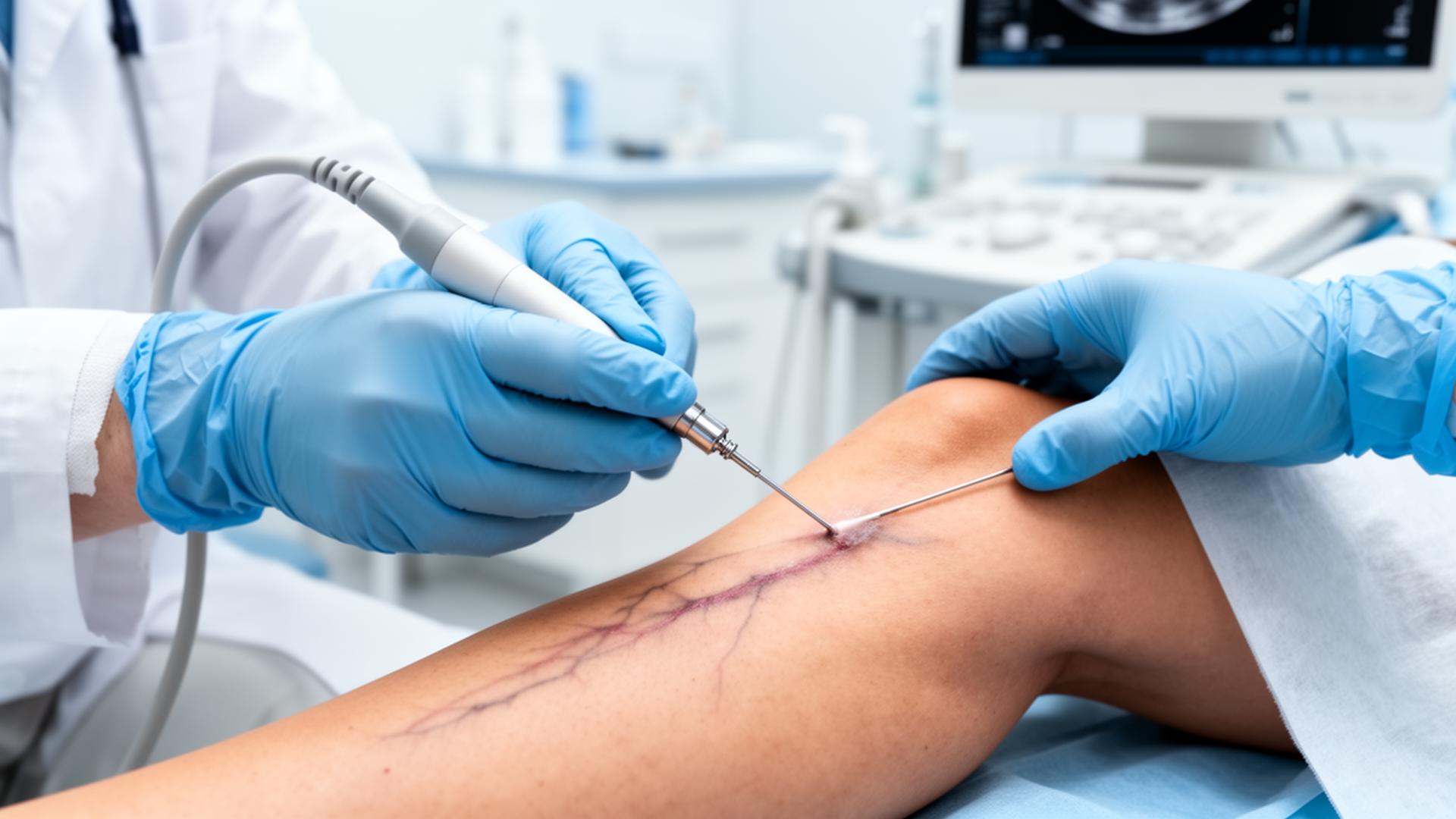
Radiofrequency Ablation (RFA) involves heating the vein wall using temperature-controlled radio-frequency energy to shrink and seal the problem vein. Once the vein has been closed, blood is naturally rerouted to healthy veins. The closed vein is treated as waste by the body and is absorbed over time. RFA is the gold standard for treating saphenous vein reflux, the most common cause of varicose veins.
Medicare and most major insurance accepted. Coverage depends on medical necessity and your plan.
Benefits of Radiofrequency Ablation
- Minimally invasive — performed in-office
- Local anesthesia only — no general sedation
- Procedure typically takes 30–60 minutes
- Walk out the same day
- Return to normal activity immediately
- Covered by Medicare and most insurance
- Clinically proven 90%+ long-term closure rates
How the Procedure Works
- Local anesthetic is applied to the treatment area.
- A thin catheter is inserted into the diseased vein under ultrasound guidance.
- Radiofrequency energy is delivered along the vein wall, causing it to seal closed.
- The catheter is removed and a small bandage is placed.
- You'll walk out wearing a compression stocking and resume normal activity.
Recovery and Aftercare
Most patients experience mild soreness or tightness along the treated vein for a few days. We recommend daily walking, wearing compression stockings for 1–2 weeks, and avoiding heavy lifting for 48 hours. A follow-up ultrasound confirms the vein is sealed.
Frequently Asked Questions
Is RFA painful?
RFA is performed under local anesthesia. Patients typically feel pressure and warmth, but no sharp pain.
How long do results last?
Once a vein is closed and absorbed, it cannot reopen. Long-term studies show 90%+ closure rates at 5 years.
Is RFA covered by insurance?
Yes — when treating symptomatic venous insufficiency, RFA is covered by Medicare and most insurance plans.
What's the difference between RFA and laser ablation?
Both seal veins thermally with similar results. RFA uses radiofrequency energy; EVLA uses laser. Your surgeon will recommend the best option for your anatomy.
Your Recovery Timeline
Day 0
Walk out the same day
Procedure complete in under an hour. Compression stocking on, drive yourself home.
Days 1–3
Light activity
Mild tightness along the vein. Daily walking encouraged. No heavy lifting or hot baths.
Week 1
Back to work
Most patients return to their normal job and exercise routine within 5–7 days.
Weeks 2–4
Bruising fades
Compression stockings discontinued. Treated vein begins reabsorbing into the body.
Month 3
Confirmation ultrasound
Follow-up duplex ultrasound confirms vein closure. Symptoms typically resolved.
Get Your Free Consultation Today
Schedule your appointment today and take the first step toward relief.
Request Your Appointment Today
Request a visit and our care team will call you within one business day to arrange your appointment.
Ready to talk to a specialist?
Our care team can help you explore your options and arrange an appointment that fits your needs.
Most major insurance accepted · 4119 NW Barry Rd, Kansas City, near Zona Rosa