Most major insurance accepted. Coverage for this procedure varies; we check your benefits before treatment.

    Shoulder Artery Embolization (SAE) in Kansas City

    A minimally invasive, non-surgical solution for chronic shoulder pain caused by osteoarthritis, rotator cuff tendinopathy, and adhesive capsulitis.

    Shoulder Artery Embolization (SAE) in Kansas City

    Chronic shoulder pain can limit your ability to work, sleep, and enjoy everyday activities. If conservative treatments like physical therapy, steroid injections, and medications haven't provided lasting relief, Shoulder Artery Embolization (SAE) — also known as shoulder embolization, frozen shoulder embolization, or rotator cuff embolization — may be the breakthrough you've been looking for. At Restore Muscle and Joint, our board-certified vascular specialists perform this cutting-edge procedure right in our Kansas City clinic.

    What is Shoulder Artery Embolization?

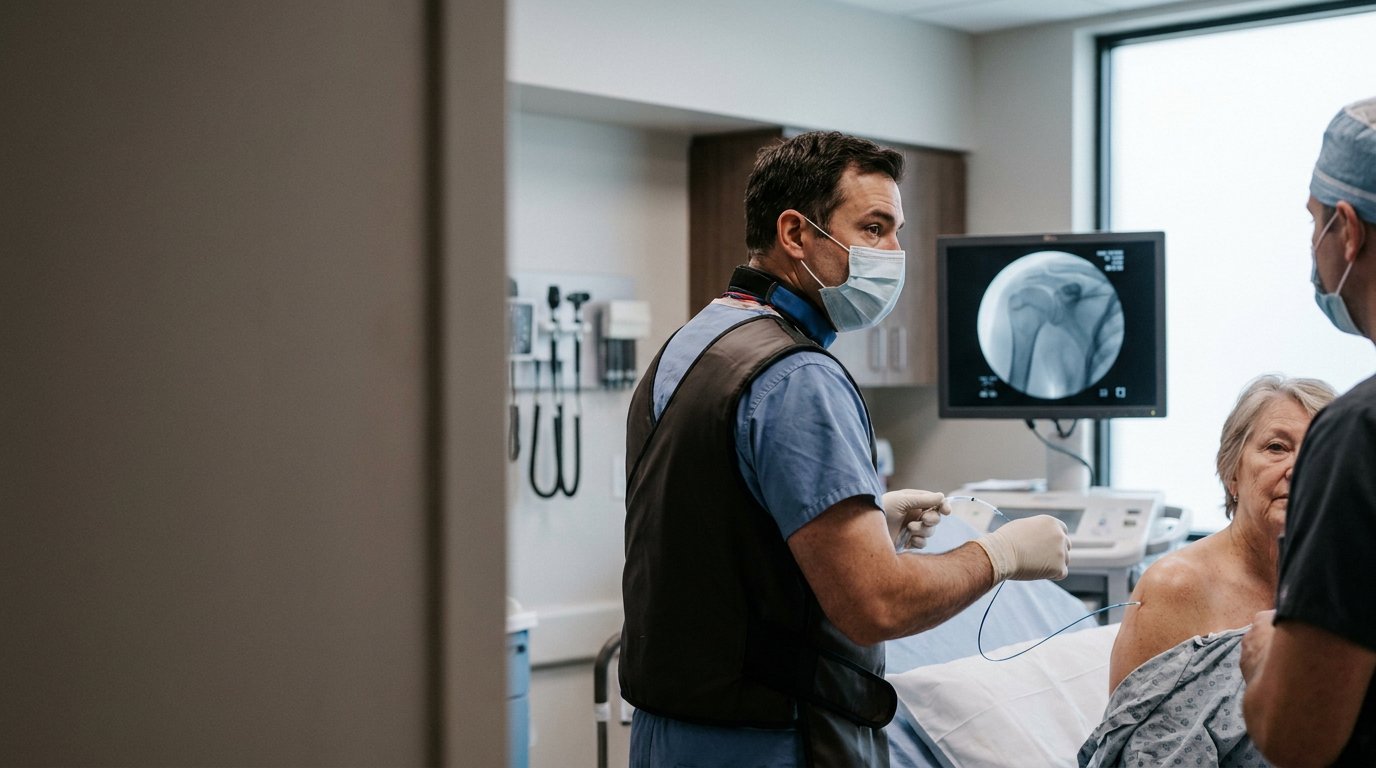
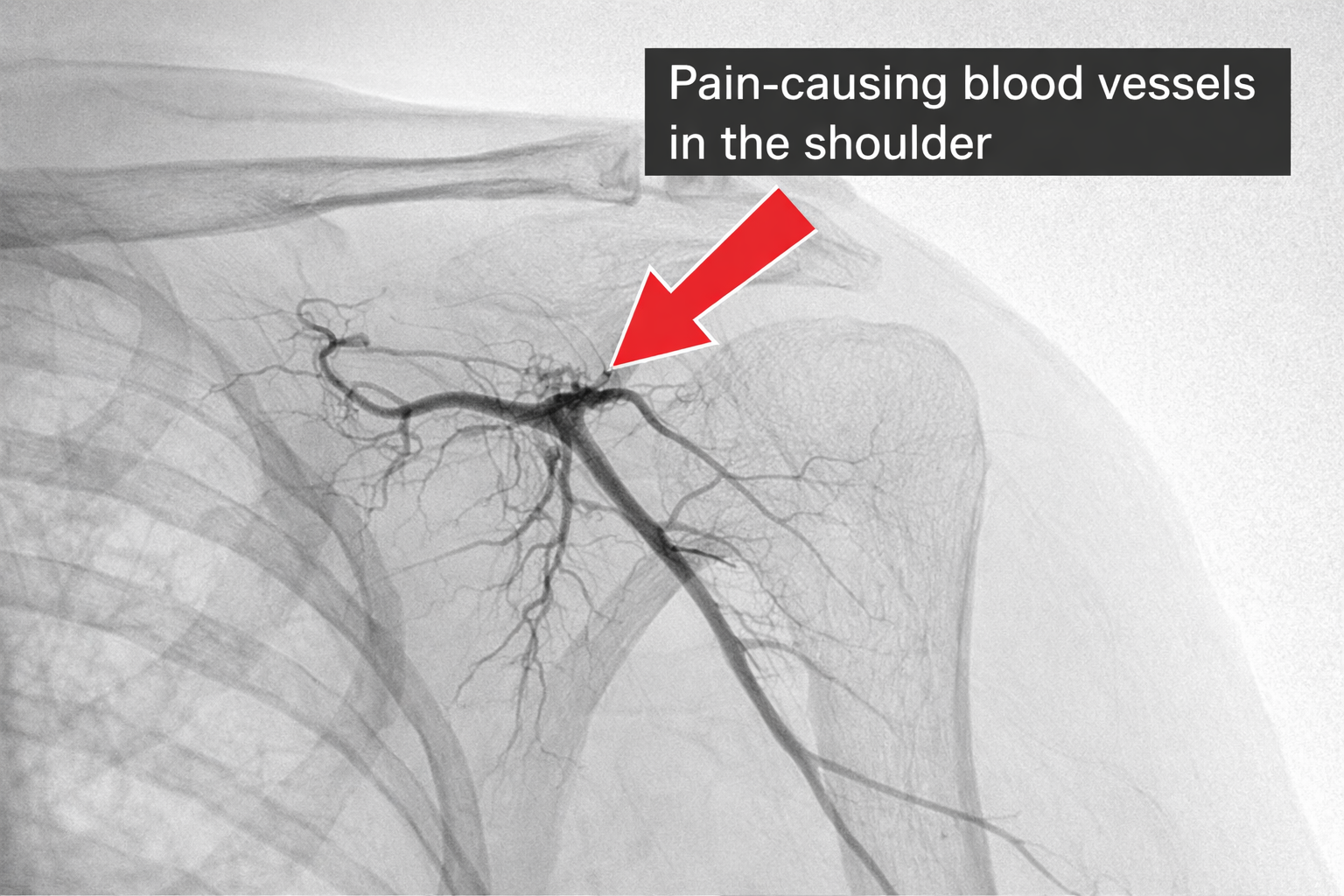
    Shoulder Artery Embolization is a minimally invasive, catheter-based procedure that targets abnormal blood vessels feeding inflammation in the shoulder joint. Using real-time imaging (fluoroscopy), a tiny catheter is guided through a small nick in the skin—typically at the wrist—to the arteries supplying the inflamed tissue. Microscopic particles are then injected to reduce blood flow to these areas, decreasing inflammation and pain at the source. The concept builds on the proven success of Genicular Artery Embolization (GAE) for knee osteoarthritis and applies the same principles to the shoulder.

    Conditions Treated with Shoulder Embolization

    • Shoulder Osteoarthritis (Glenohumeral OA): Degenerative joint disease causing chronic pain, stiffness, and reduced range of motion.
    • Adhesive Capsulitis (Frozen Shoulder): Inflammation and thickening of the shoulder capsule leading to severe stiffness and pain.
    • Rotator Cuff Tendinopathy: Chronic inflammation of the rotator cuff tendons that hasn't responded to conservative care.
    • Chronic Shoulder Pain: Persistent pain from inflammatory conditions that limits daily function and quality of life.

    How the Procedure Works

    The procedure is performed under moderate sedation in our state-of-the-art Office-Based Lab (OBL):

    1. A small catheter is inserted through the radial artery at the wrist.
    2. Using fluoroscopic guidance, the catheter is navigated to the arteries feeding the inflamed shoulder tissues.
    3. Tiny microspheres are injected to block abnormal blood flow and reduce inflammation.
    4. The catheter is removed and a small bandage is applied—no stitches needed.

    The entire procedure typically takes 60–90 minutes. Most patients go home the same day and return to normal activities within 1–2 days.

    Shoulder embolization procedure in interventional radiology suite

    Most major insurance accepted. Coverage for this procedure varies; we check your benefits before treatment.

    Benefits of Shoulder Artery Embolization

    • Minimally Invasive: No surgical incisions, no general anesthesia, and no hospital stay.
    • Quick Recovery: Most patients resume daily activities within 24–48 hours.
    • Significant Pain Relief: Early studies show substantial pain reduction and improved shoulder function lasting 12+ months.
    • Preserves Joint Structure: Unlike shoulder replacement, SAE preserves the natural joint anatomy.
    • Outpatient Procedure: Performed in our office-based lab—no hospital visit required.
    • Covered by Most Insurance Plans: Our office will help verify your coverage before scheduling.

    Latest Research on Shoulder Embolization

    Recent studies report encouraging results for shoulder embolization, particularly for adhesive capsulitis (frozen shoulder) that has not responded adequately to conservative treatment. These findings help inform a consultation; they do not guarantee an individual outcome. Research reviewed through October 31, 2026.

    Larger frozen shoulder study: pain and movement at 12 months

    Fernández Martínez and colleagues · CardioVascular and Interventional Radiology · June 5, 2025

    In 118 patients undergoing 128 procedures, average pain decreased from 7.8 to 2.2 out of 10 at six months. Forward elevation improved from approximately 90° to 143°, and abduction improved from approximately 80° to 129°. Clinical improvement was documented after 115 of 128 procedures (89.8%) at twelve months. No major adverse events were reported.

    What to keep in mind: This was a retrospective case series without a control group. The 89.8% figure refers to procedures, not individual patients, and does not establish superiority over physical therapy, injections or surgery.

    Read “Clinical Outcomes of Shoulder Artery Embolization for Adhesive Capsulitis”

    2026 frozen shoulder study: meaningful pain and function improvement

    Banker and colleagues · Journal of Clinical Interventional Radiology ISVIR · June 15, 2026

    Among 40 patients with frozen shoulder refractory to conservative care, 32 (80%) met the study’s clinical-success definition at three months: at least a 30% reduction in pain plus a meaningful improvement on a shoulder-function score. Improvement was maintained at six and twelve months among patients with available follow-up.

    Temporary shoulder redness occurred in 5% and post-embolization aching that resolved within 72 hours occurred in 20%. No skin necrosis, osteonecrosis or infection was observed.

    What to keep in mind: This was a small, single-center retrospective study without a control group. Most procedures used a temporary zinc-alginate agent (KIPZA); embolic materials and techniques may differ from those used at our clinic.

    Read “Transarterial Embolization for Adhesive Capsulitis (‘Frozen Shoulder’): A Single-Centre Retrospective Study of 40 Patients Using Temporary Embolic Agent – KIPZA”

    Additional recent research

    How strong is the evidence? These observational studies are promising, but lack randomized comparison groups. Frozen shoulder findings should not be assumed to apply equally to shoulder arthritis, rotator cuff tears or every cause of shoulder pain. An October 2026 review of musculoskeletal embolization emphasizes careful patient selection and further comparative trials to establish durability and clinical value. Your specialist can discuss the evidence, alternatives and procedure risks for your diagnosis.

    Performed at Leading Medical Centers Nationwide

    Shoulder Artery Embolization (SAE) is part of a growing field of minimally invasive, image-guided interventional procedures. Leading academic medical centers and interventional radiology programs across the country are actively performing and researching arterial embolization for musculoskeletal and chronic pain conditions, including:

    Restore Muscle and Joint is independent and not affiliated with the institutions listed above. Links are provided as references to the broader field of interventional radiology where these procedures are performed and studied.

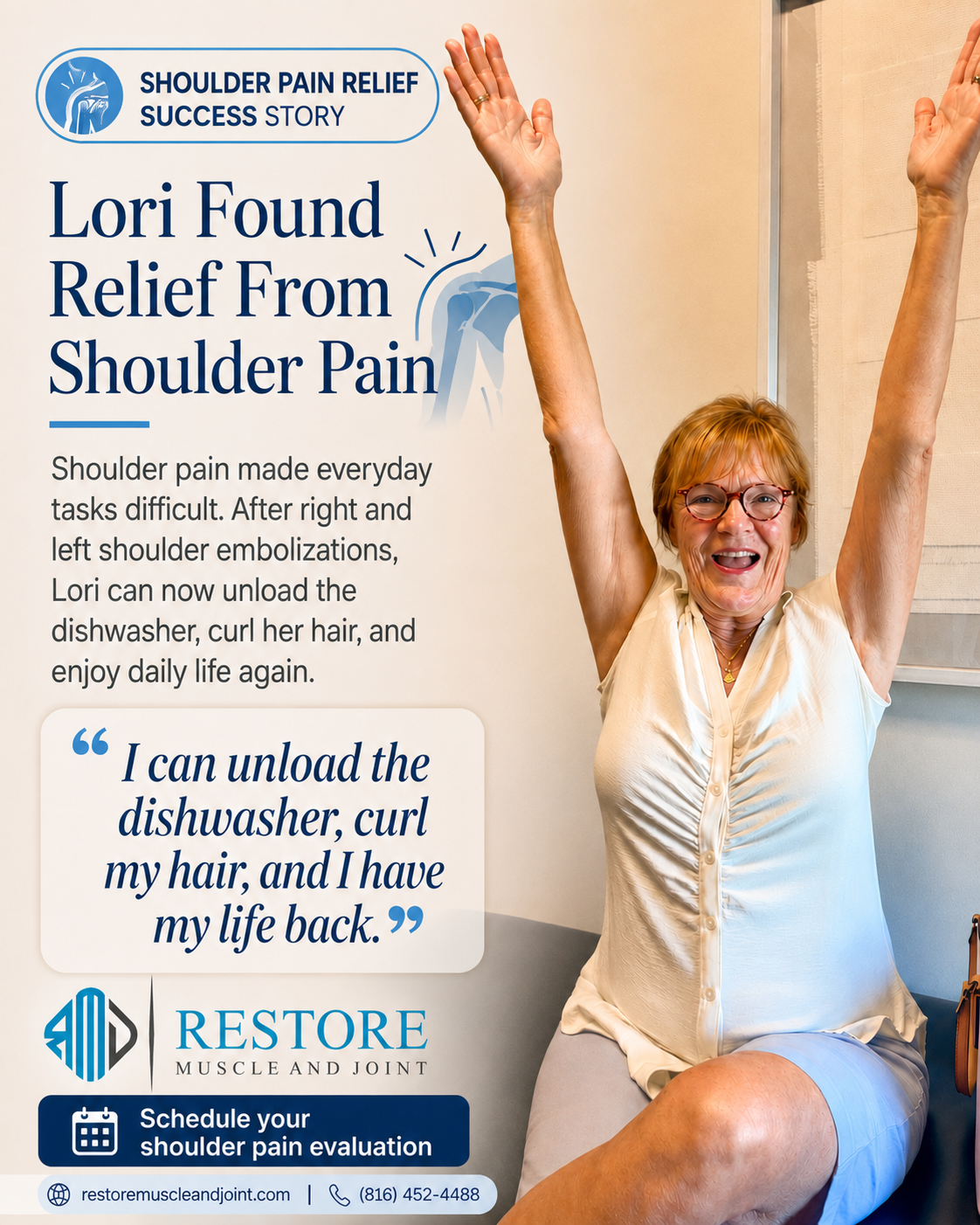
    Patient Success Story: Lori's Shoulder Embolization

    Lori lived with debilitating shoulder pain that made everyday tasks — unloading the dishwasher, curling her hair, even getting dressed — feel impossible. After right and left shoulder embolizations at Restore Muscle and Joint, she got her life back. Watch her story and see the full success story below.

    Lori shoulder pain relief success story flyer from Restore Muscle and Joint
    “I can unload the dishwasher, curl my hair, and I have my life back.”
    — Lori, Restore Muscle and Joint patient

    Frequently Asked Questions

    What is Shoulder Artery Embolization (SAE)?

    SAE is a minimally invasive procedure that reduces chronic shoulder pain by blocking blood flow to inflamed arteries around the shoulder joint using tiny microspheres delivered through a catheter.

    Who is a good candidate for SAE?

    Patients with chronic shoulder pain from osteoarthritis, frozen shoulder, or rotator cuff tendinopathy who haven't found lasting relief from physical therapy, injections, or medications may be ideal candidates.

    How long does the procedure take?

    The procedure typically takes 60–90 minutes and is performed as an outpatient procedure in our office-based lab.

    What is recovery like?

    Most patients experience minimal discomfort and return to normal activities within 1–2 days. You can expect gradual pain improvement over the following weeks.

    Is SAE covered by insurance?

    Many insurance plans cover this procedure. Our team will work with you to verify your benefits and coverage before scheduling.

    How is SAE different from shoulder surgery?

    Unlike shoulder replacement or arthroscopic surgery, SAE requires no incisions, no general anesthesia, and no extended recovery period. It preserves your natural joint structure.

    What results can I expect?

    Clinical studies show significant pain reduction and improved range of motion in the majority of patients, with results lasting 12 months or longer.

    Are there risks or side effects?

    SAE is generally well-tolerated. Minor side effects may include temporary bruising at the catheter site or mild skin warmth around the shoulder, both of which resolve quickly.

    How long does SAE pain relief last?

    Published clinical research shows that most appropriately selected patients experience sustained pain reduction at 12 months and beyond. Many patients report continued improvement in range of motion well past the one-year mark.

    Is SAE covered by Medicare?

    Yes. Medicare and most major commercial insurance plans cover Shoulder Artery Embolization for patients with documented chronic shoulder pain that hasn't responded to conservative care. Our office verifies coverage before scheduling.

    Is SAE the same as shoulder embolization or frozen shoulder embolization?

    Yes — 'shoulder embolization,' 'frozen shoulder embolization,' and 'rotator cuff embolization' all refer to the same minimally invasive Shoulder Artery Embolization procedure that reduces blood flow to inflamed areas of the shoulder joint.

    Can I avoid shoulder replacement surgery with SAE?

    For many patients with mild to moderate shoulder osteoarthritis, frozen shoulder, or rotator cuff tendinopathy, SAE provides meaningful pain relief that can delay or eliminate the need for shoulder replacement or arthroscopic surgery.

    Who performs Shoulder Artery Embolization at Restore Muscle and Joint?

    SAE is performed at our Kansas City office by board-certified vascular surgeons Dr. Robert R. Carter (MD, FSVS, FACS, RPVI) and Dr. Jonathan E. Wilson (DO, FACOS, FSVS, RPVI), both with advanced fellowship training in image-guided endovascular procedures.
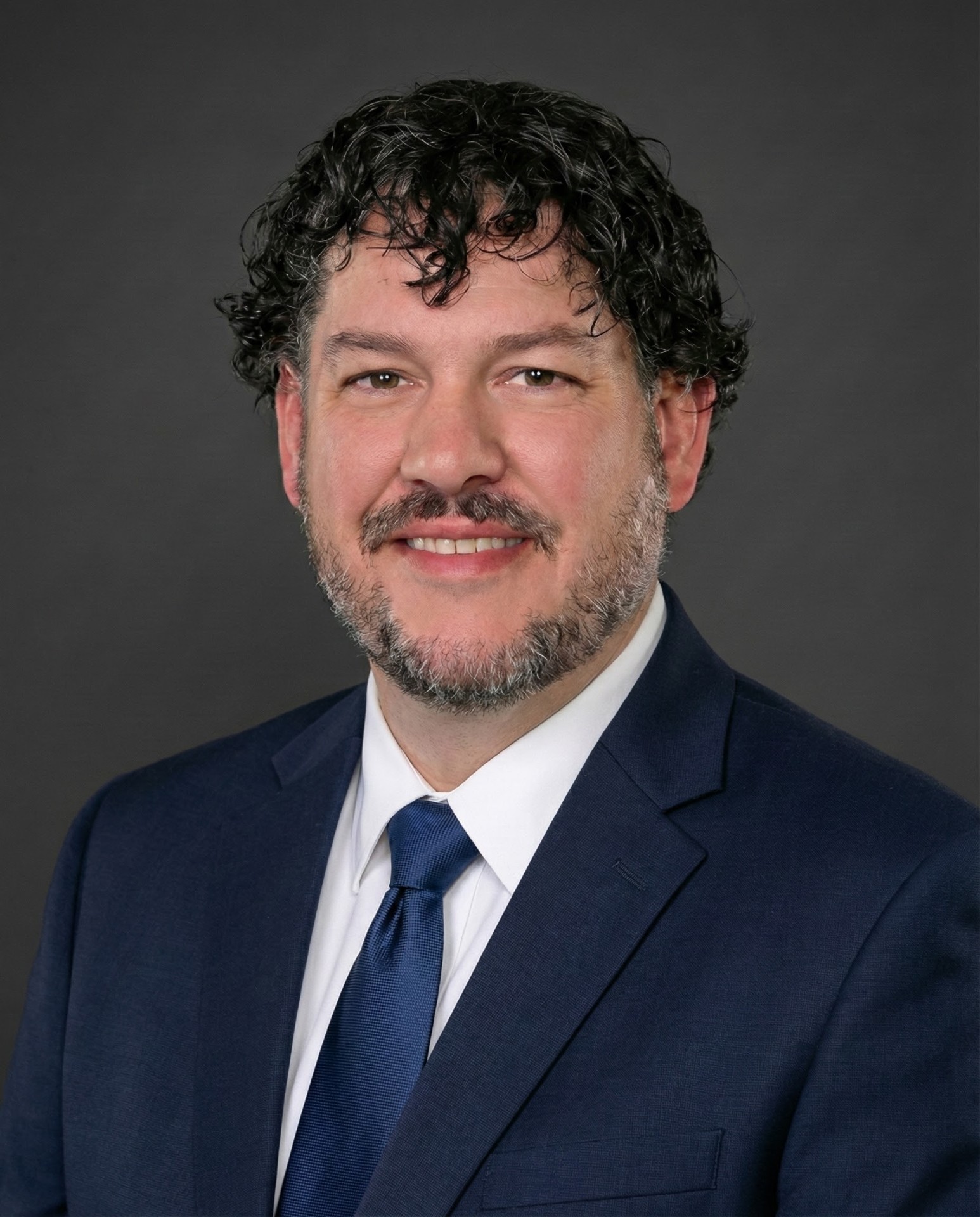
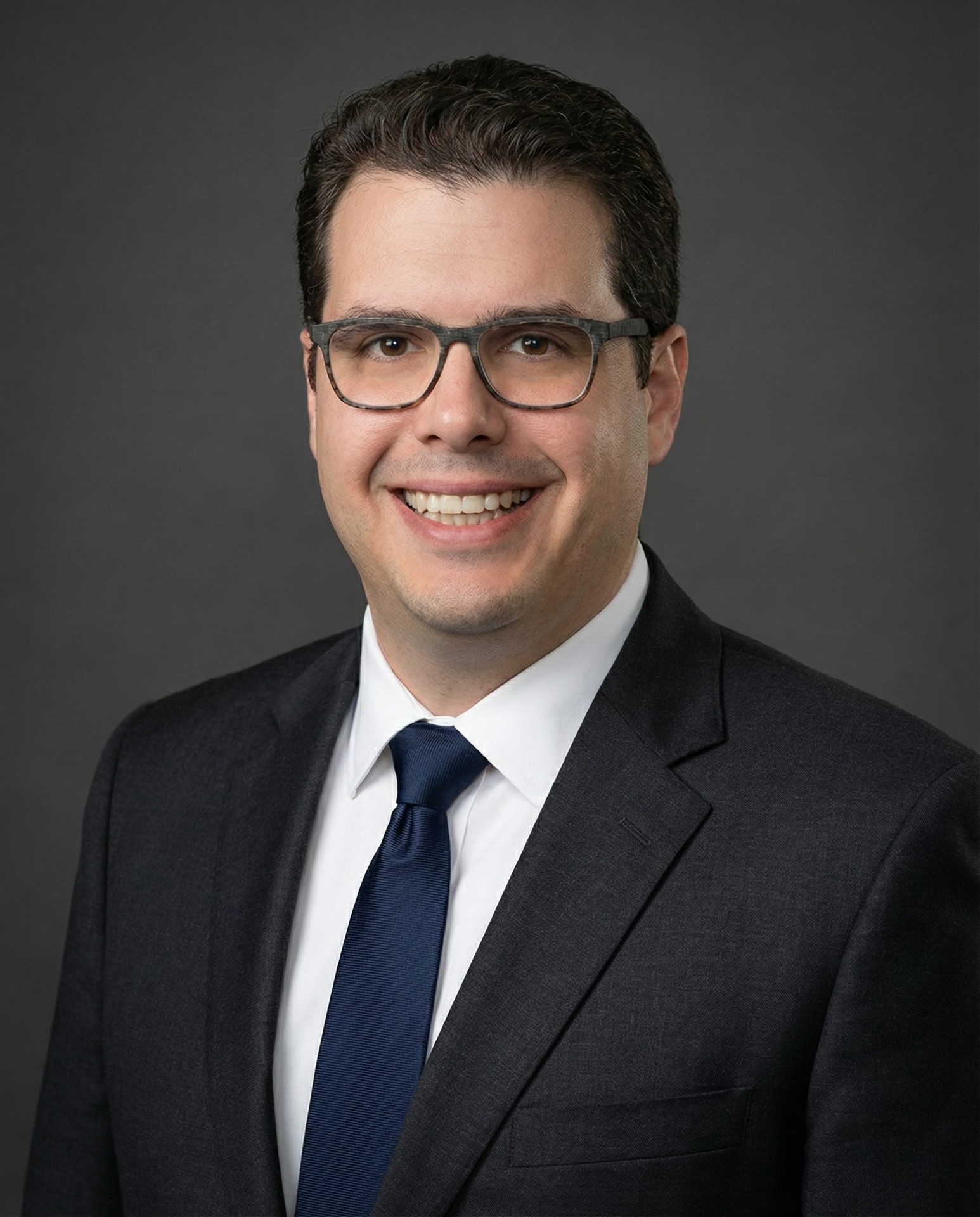
    Meet Your SAE Providers

    Your Shoulder Artery Embolization is performed by board-certified vascular surgeons with advanced fellowship training in image-guided, minimally invasive procedures.

    Dr. Robert R. Carter, board-certified vascular surgeon performing Shoulder Artery Embolization in Kansas City

    Dr. Robert R. Carter

    MD, FSVS, FACS, RPVI

    Board-certified vascular surgeon and Fellow of the American College of Surgeons. UC Davis medical degree, vascular surgery fellowship at the University of Kentucky. Published author and associate professor training the next generation of surgeons in Kansas City.

    View Full Bio
    Dr. Jonathan E. Wilson, board-certified vascular surgeon performing Shoulder Artery Embolization in Kansas City

    Dr. Jonathan E. Wilson

    DO, FACOS, FSVS, RPVI

    Board-certified vascular surgeon specializing in minimally invasive, image-guided embolization procedures for chronic pain conditions of the shoulder, knee, elbow, and foot.

    View Full Bio
    100% Free • No Obligation

    Get Your Free Consultation Today

    If chronic shoulder pain is limiting your life, Shoulder Artery Embolization at Restore Muscle and Joint could be the answer. Contact us today at 816-452-4488 to schedule a consultation and learn if SAE is right for you.

    Request Your Appointment Today

    Request a visit and our care team will call you within one business day to arrange your appointment.

    Ready to talk to a specialist?

    Our care team can help you explore your options and arrange an appointment that fits your needs.

    Most major insurance accepted · 4119 NW Barry Rd, Kansas City, near Zona Rosa