Most major insurance accepted.
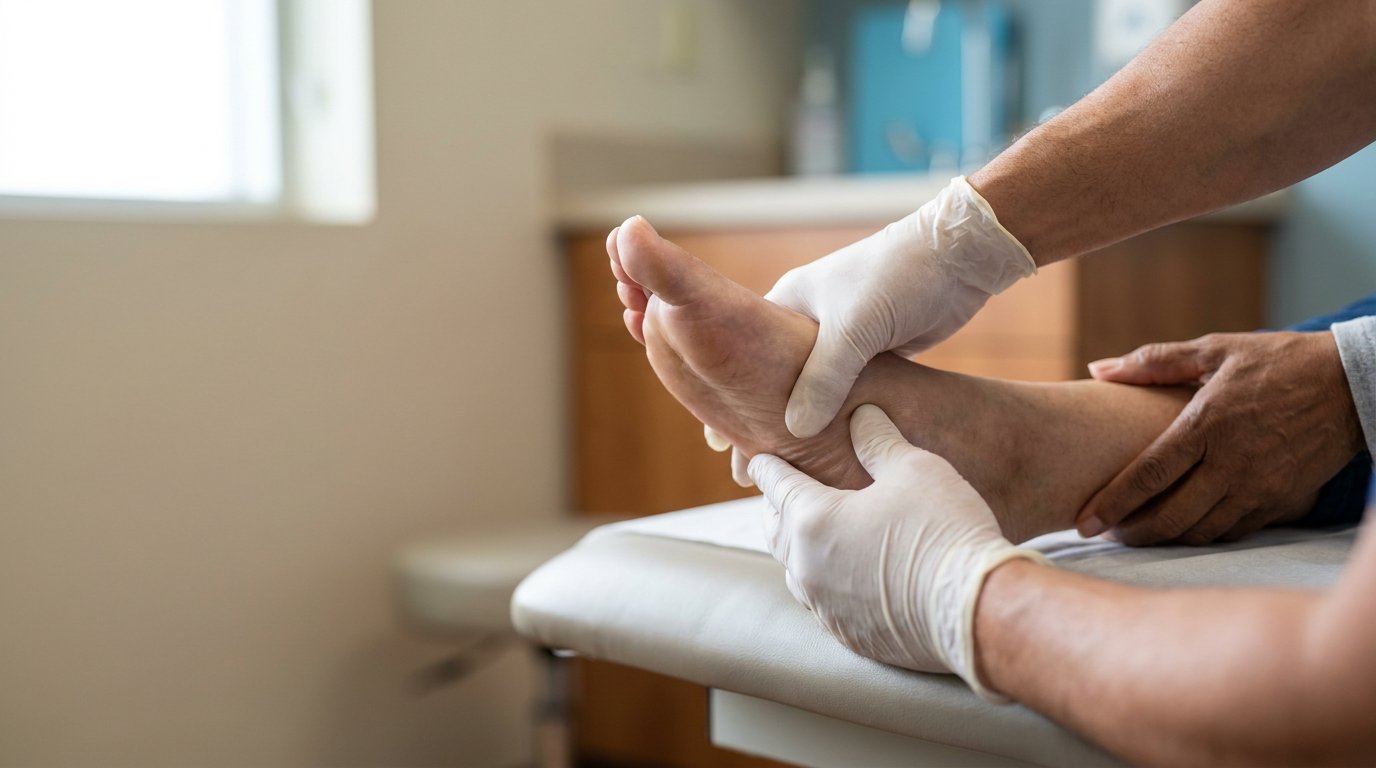
Plantar Fasciitis Treatment in Kansas City, MO
Heel and arch pain treated on NW Barry Rd. — manual therapy, dry needling, shockwave-style soft tissue work, loading programs, and image-guided options for chronic cases. Most insurance and Medicare accepted.
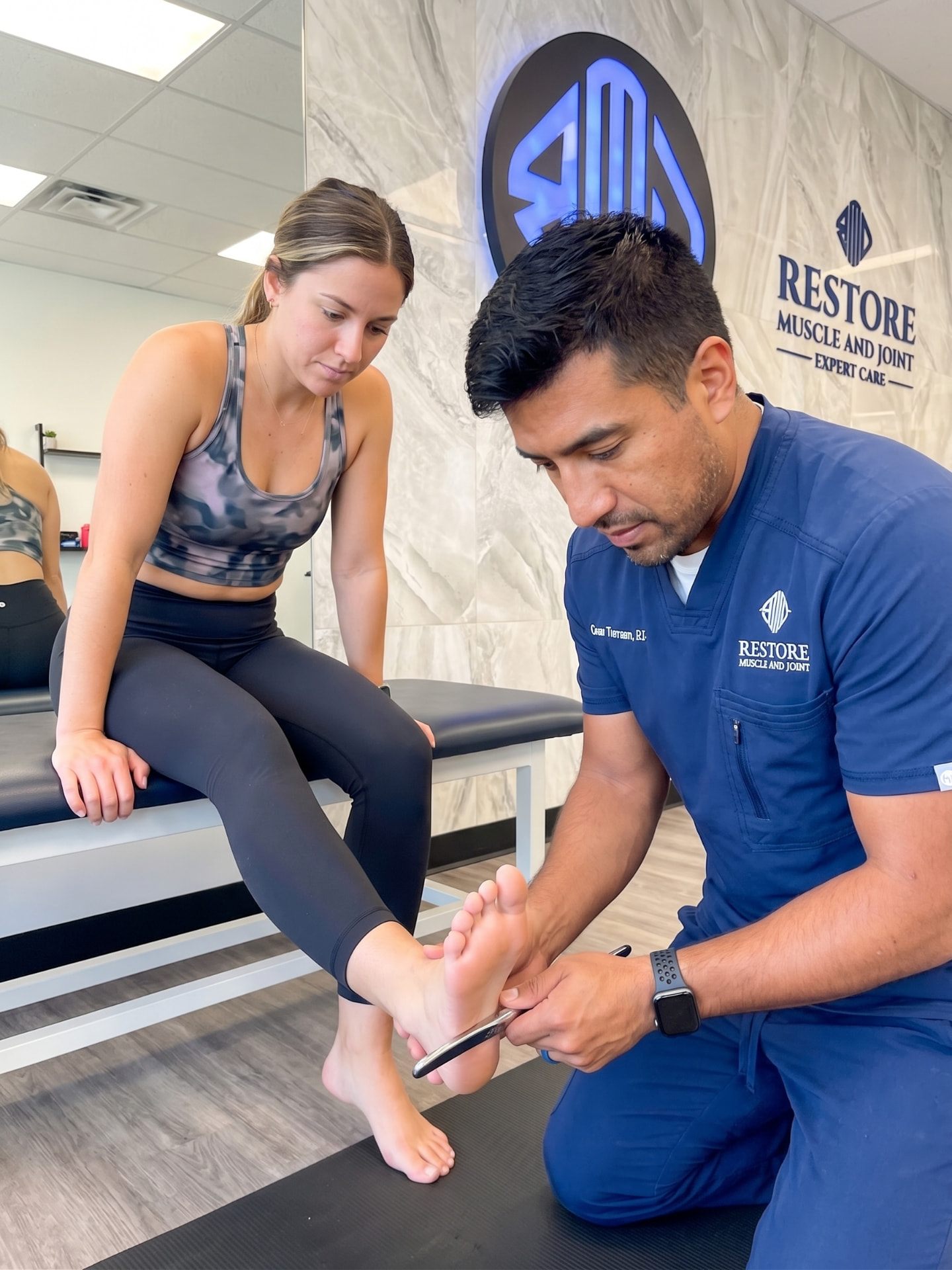
If you searched "plantar fasciitis treatment near me" or "heel pain doctor Kansas City" because that first step out of bed feels like stepping on a nail — Restore Muscle and Joint treats heel pain every day at our clinic on NW Barry Rd. in Kansas City's Northland. Chiropractic, physical therapy, and medical care under one roof means you get the full workup, not a stretch handout.
Plantar fasciitis is the most common cause of heel pain in adults, and roughly 90% of cases resolve without surgery when they're loaded and treated correctly. The problem is that most people rest, stretch a little, buy an insole, and never address the calf tightness, foot mechanics, or tissue degeneration that keeps it going. We find the driver and fix it.
Plantar Fasciitis Symptoms We Treat
- Sharp, stabbing heel pain with your first steps in the morning
- Pain that returns after sitting, then eases once you get moving
- Heel or arch pain after standing or walking a full shift
- Tenderness on the inside front of the heel bone when you press it
- Pain that worsens barefoot or in flat, unsupportive shoes
- Tight calves or a stiff Achilles tendon
- Burning or aching along the arch of the foot
- Heel pain that has lasted more than six weeks despite rest and stretching
What's Actually Causing Your Heel Pain?
The plantar fascia is a thick band of connective tissue running from your heel bone to the base of your toes. It's a shock absorber, and it fails when the load on it outpaces its capacity. Despite the "-itis" name, chronic cases are usually degenerative (fasciosis), not purely inflammatory — which is exactly why anti-inflammatories alone so often disappoint.
- Tight calves and Achilles tendon — the single most common driver. Limited ankle dorsiflexion forces the arch to absorb the load instead.
- Sudden load spikes — a new job on your feet, ramping up running mileage, or a summer of flat sandals.
- Weak foot and hip muscles — when the intrinsic foot muscles and glutes can't control the arch, the fascia takes over.
- Foot structure — flat feet or high rigid arches both change how load funnels into the heel.
- Worn or unsupportive footwear — including the work boots and non-slip shoes many of our federal and warehouse patients live in.
- Heel spurs — a result of chronic fascia tension, not usually the pain generator itself.
- Look-alike conditions we rule out — Baxter's nerve entrapment, fat pad atrophy, calcaneal stress fracture, Achilles insertional tendinopathy, and heel pain referred from the low back or from peripheral neuropathy.
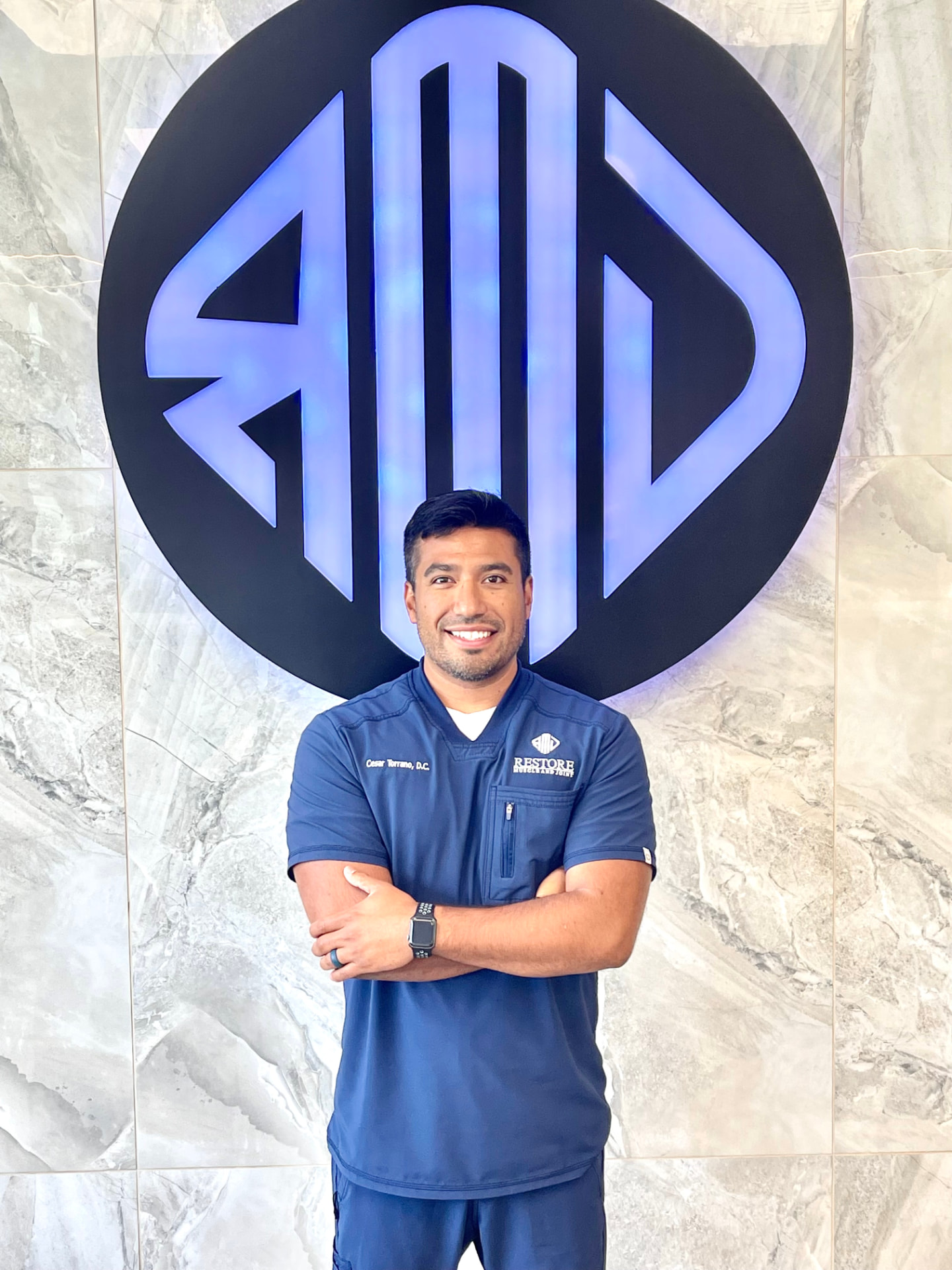
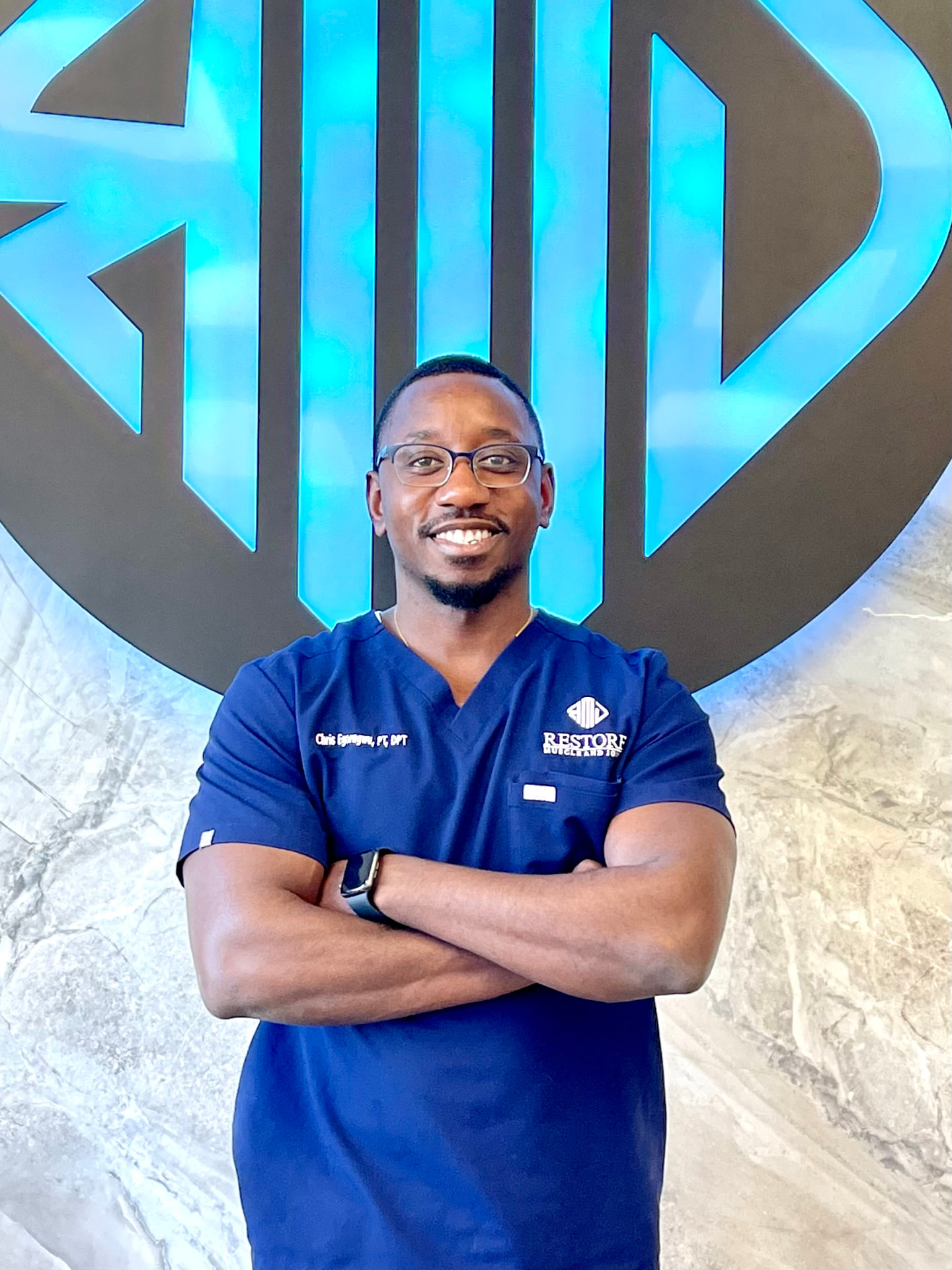
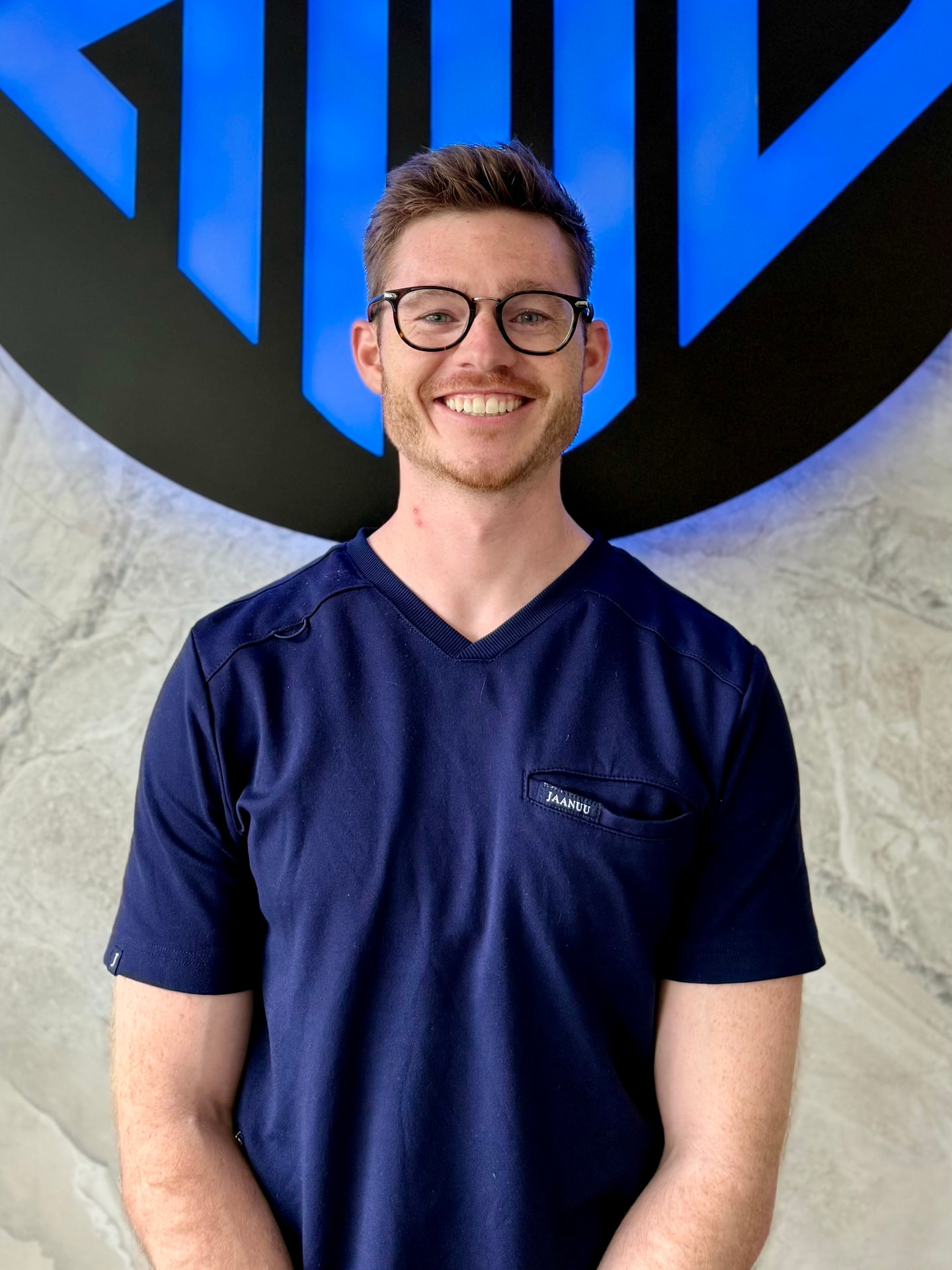
Meet Your Kansas City Heel Pain Team
Every visit is one-on-one with a licensed provider — hands-on treatment, not a machine and a timer.
Most major insurance accepted.
Our 4-Step Plantar Fasciitis Protocol
Step 1 — Diagnose It Properly
Hands-on exam of the heel, arch, and Achilles; ankle mobility and calf length testing; gait and footwear analysis; windlass and palpation testing; and imaging when we need to rule out a stress fracture, nerve entrapment, or fat pad problem. You leave knowing exactly what's wrong.
Step 2 — Calm the Pain Down
Manual and instrument-assisted soft tissue therapy to the arch and calf, dry needling of the gastroc-soleus and plantar tissue, chiropractic mobilization of the foot, ankle, and first toe, taping, and short-term load management. Most patients notice a difference in morning pain within the first two weeks.
Step 3 — Rebuild Tissue Capacity
This is the part most people skip. Progressive high-load heel raises with the toes extended, intrinsic foot strengthening, calf and Achilles lengthening, and hip and calf endurance work through physical therapy and rehabilitative therapy. Loading the fascia is what remodels it.
Step 4 — Keep It From Coming Back
Footwear and orthotic guidance for your actual job and activity, night splint recommendations when morning pain dominates, a return-to-running or return-to-shift plan, and a home program short enough that you'll do it.
Options for Chronic Heel Pain That Won't Quit
If your heel pain has lasted six months or longer despite stretching, orthotics, injections, or a boot, you're in the small group with true chronic plantar fasciosis — and you still don't need surgery. Our integrated medical team offers escalating, image-guided options:
- Ultrasound-guided injections — precise placement, with imaging confirming the target rather than a blind stick into the heel.
- Regenerative and needling procedures — percutaneous tenotomy-style techniques that stimulate healing in degenerated tissue.
- Plantar fasciitis embolization — a minimally invasive, outpatient procedure that reduces the abnormal blood vessels and nerve ingrowth driving chronic heel pain, performed through a pinhole in the ankle with no stitches and a same-day return home. Learn more about plantar fasciitis embolization in Kansas City.
We always start conservative. Embolization and injections are for the patients who genuinely have exhausted the basics — and we'll tell you honestly which group you're in.
Heel Pain From Work, Sports, or a Federal Injury
Plantar fasciitis is an occupational condition for a lot of Kansas City workers — postal carriers, TSA screeners, nurses, warehouse and line staff, teachers, and anyone standing on concrete for ten hours.
- Federal employees — we're an OWCP/DOL provider and document heel pain claims correctly from day one. See our federal workers' compensation program.
- Runners and athletes — training-load analysis and a graded return-to-run plan, not an indefinite "stop running."
- Older adults — heel pain that changes how you walk quietly raises fall risk; we screen for it and treat it through our balance and gait program.
Why Kansas City Patients Choose Restore for Heel Pain
Diagnosis first, not a generic stretch sheet
We separate true plantar fasciitis from nerve entrapment, stress fracture, and fat pad problems.
Hands-on treatment plus real loading
Soft tissue work and dry needling for relief, progressive strength work for lasting change.
Chiropractic, PT, and medical in one building
If conservative care stalls, image-guided options are down the hall — no new referral hunt.
Built for people on their feet
Footwear, orthotic, and shift-management guidance specific to your job.
Insurance, Medicare, OWCP, and auto accepted
Including Medicare Advantage, federal workers' comp, MedPay, and major commercial plans.
Northland convenience
4119 NW Barry Rd., Kansas City, MO 64154 — free parking, same-week appointments.
Plantar Fasciitis Care Across the Kansas City Metro
Patients come to our NW Barry Rd. clinic for heel and arch pain from across the Northland and the greater Kansas City metro:
Also serving Riverside, Weatherby Lake, Pleasant Valley, Claycomo, and North Kansas City. See our full service area.
Frequently Asked Questions
Where can I get plantar fasciitis treatment near me in Kansas City?
Restore Muscle and Joint treats plantar fasciitis at 4119 NW Barry Rd., Kansas City, MO 64154, in the Northland. Our chiropractors and doctors of physical therapy combine manual therapy, dry needling, and progressive loading programs, with image-guided medical options available for chronic cases. Call (816) 452-4488.
How long does plantar fasciitis take to heal?
Most patients feel meaningfully better within two to six weeks of starting the right treatment, with full resolution typically in three to six months. Chronic cases that have gone untreated for a year take longer, but roughly 90% still resolve without surgery when the calf, foot strength, and load are addressed together.
Why does my heel hurt most in the morning?
Overnight, the plantar fascia shortens while your foot rests in a pointed position. Your first steps suddenly stretch that healing tissue, producing the classic stabbing pain that eases after a few minutes of walking. Night splints and calf work target exactly this pattern.
Can a chiropractor treat plantar fasciitis?
Yes. Chiropractors are trained in musculoskeletal diagnosis and treat plantar fasciitis with foot and ankle joint mobilization, soft tissue therapy, dry needling of the calf and arch, taping, and rehab prescription. At Restore, chiropractic care is paired with physical therapy so both mechanics and tissue capacity are addressed.
Do I need orthotics or special shoes?
Sometimes. Supportive footwear and an insert can reduce symptoms quickly, but they manage load rather than fix the underlying problem. We recommend them alongside strengthening, and we make specific recommendations based on your foot type and your job.
Do cortisone shots work for heel pain?
A cortisone injection can give short-term relief, but the benefit often fades within weeks to a few months, and repeated injections carry a risk of fat pad atrophy and fascia rupture. We use ultrasound-guided injections selectively and always alongside a loading program.
What is plantar fasciitis embolization?
It is a minimally invasive, outpatient procedure for chronic heel pain that hasn't responded to conservative care. An interventional radiologist uses imaging to reduce the abnormal small blood vessels and accompanying nerve fibers that drive persistent pain. It's performed through a pinhole access site with no stitches, and patients go home the same day.
Do heel spurs cause plantar fasciitis?
No — it's the other way around. Heel spurs form in response to chronic tension on the plantar fascia. Plenty of people have spurs on X-ray with no pain at all, which is why we treat the fascia and the calf, not the spur.
Should I stop running or working out?
Rarely completely. We adjust volume, surface, and footwear and substitute lower-impact loading while the tissue settles, then build you back up. Total rest lets the fascia weaken further and often makes the return worse.
Is dry needling effective for plantar fasciitis?
Research supports dry needling for reducing plantar heel pain, particularly when the calf muscles and the fascia insertion are targeted. It works best combined with stretching, manual therapy, and progressive strengthening rather than on its own.
Is plantar fasciitis covered by workers' compensation or OWCP?
It can be, when the condition is caused or aggravated by prolonged standing and walking at work — common for postal carriers, TSA screeners, nurses, and warehouse staff. We are an OWCP/DOL provider and document causation properly for federal claims.
Does insurance cover plantar fasciitis treatment?
Yes. Most commercial insurance, Medicare, Medicare Advantage, federal OWCP, and auto/MedPay cover evaluation and treatment for heel pain. We verify your benefits before your first visit and give you a clear cost estimate. Call (816) 452-4488.
When should I see a doctor for heel pain?
Book an evaluation if heel pain has lasted more than two to three weeks, is changing how you walk, wakes you at night, follows a specific injury, or comes with numbness, tingling, swelling, or redness. Early treatment is dramatically faster than treating a year-old case.
Get Your Free Consultation Today
Stop dreading your first step in the morning. Book your heel pain evaluation at our Kansas City Northland clinic today.
Request Your Appointment Today
Request a visit and our care team will call you within one business day to arrange your appointment.
Ready to talk to a specialist?
Our care team can help you explore your options and arrange an appointment that fits your needs.
Most major insurance accepted · 4119 NW Barry Rd, Kansas City, near Zona Rosa