
Hemorrhoid Artery Embolization (HAE) in Kansas City
A minimally invasive, non-surgical solution for chronic, bleeding, or recurrent internal hemorrhoids — no excision, no anesthesia, no downtime.
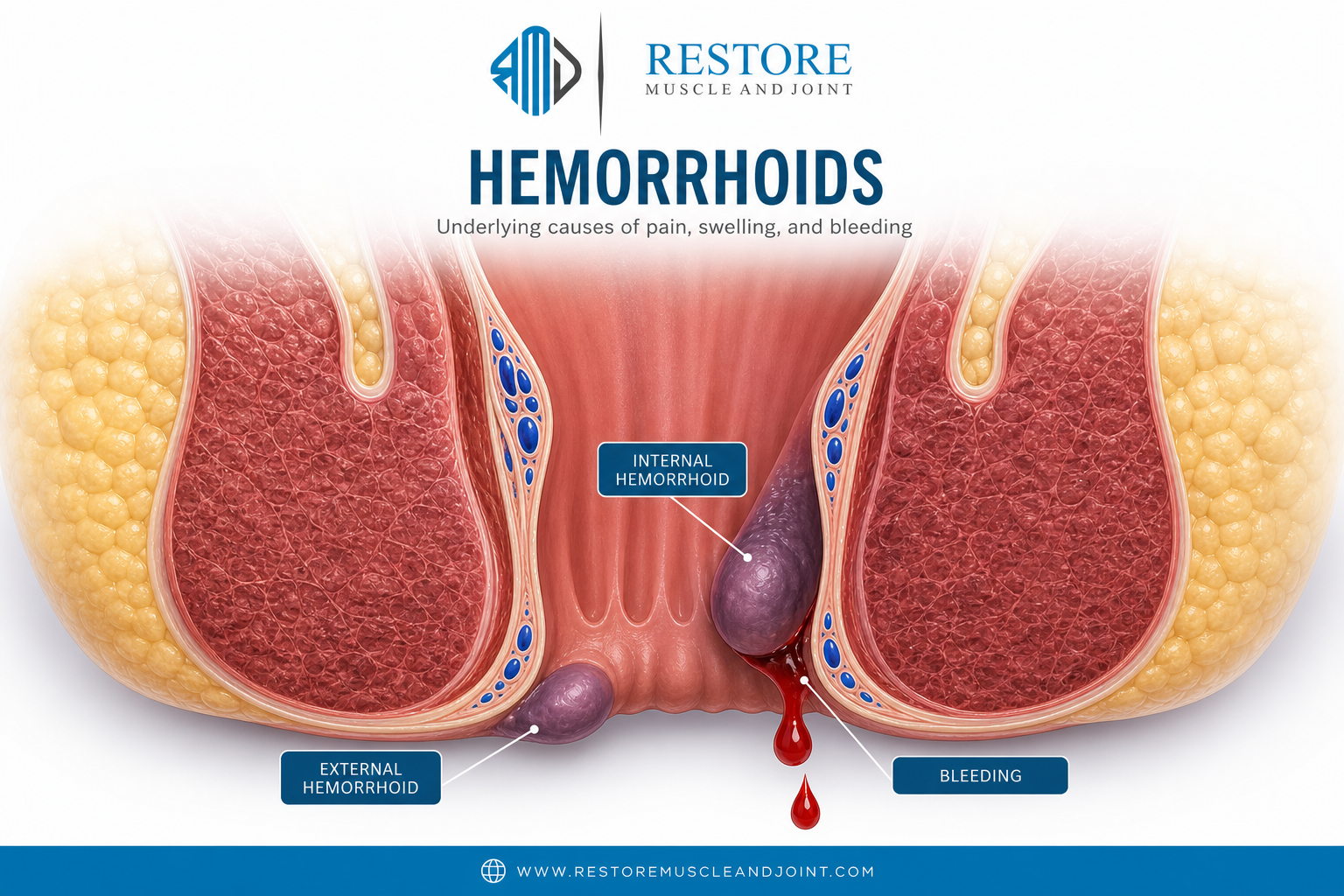
Chronic bleeding, prolapse, and discomfort from internal hemorrhoids can disrupt every part of daily life. If creams, fiber, banding, or sclerotherapy haven't given you lasting relief — and you'd rather avoid the pain and downtime of a hemorrhoidectomy — Hemorrhoid Artery Embolization (HAE), also called the Emborrhoid technique or hemorrhoidal embolization, may be the right option. At Restore Muscle and Joint, our board-certified vascular specialists perform this advanced, image-guided procedure right in our Kansas City office.
What is Hemorrhoid Artery Embolization?
Hemorrhoid Artery Embolization (HAE), known internationally as the "Emborrhoid" technique, is a minimally invasive, catheter-based procedure that treats symptomatic internal hemorrhoids by reducing blood flow to the superior rectal arteries. Using real-time fluoroscopic guidance, a tiny catheter is advanced through a small nick in the wrist or groin to the arteries feeding the hemorrhoidal cushions. Microscopic coils or particles are then placed to decrease arterial inflow, shrinking the hemorrhoids and stopping the bleeding — all without any incision, excision, or instrumentation of the anal canal.
Understanding Hemorrhoid Types
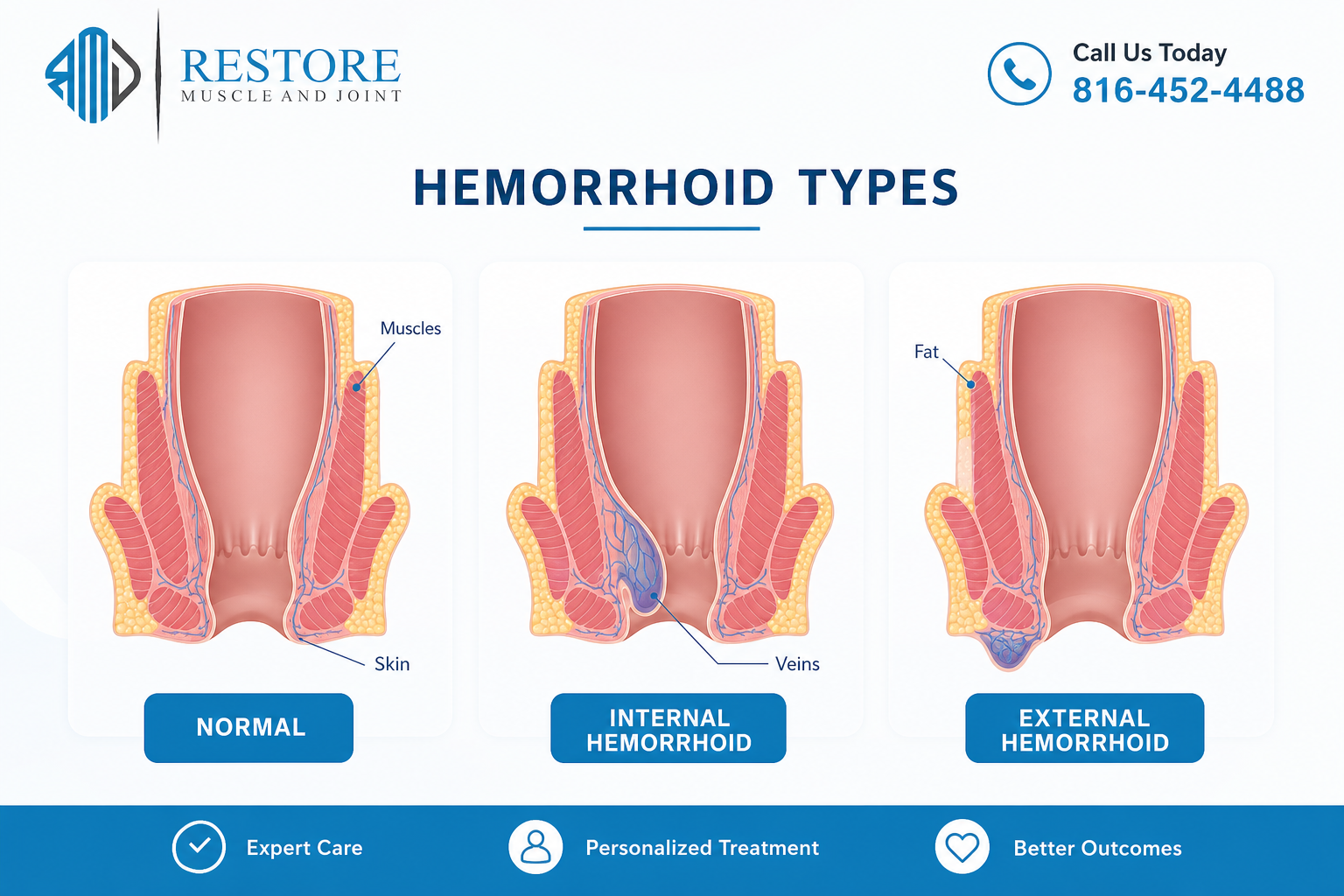
Internal hemorrhoids form inside the rectum from swollen veins above the dentate line. They are the most common cause of painless rectal bleeding and are the primary target of Hemorrhoid Artery Embolization.
External hemorrhoids develop under the skin around the anus and can cause itching, discomfort, and — when thrombosed — significant pain.
HAE is specifically designed to treat symptomatic internal hemorrhoids by addressing the underlying arterial blood supply that feeds them.
Conditions Treated with Hemorrhoid Embolization
- Chronic Bleeding Internal Hemorrhoids: Recurrent rectal bleeding that hasn't responded to dietary changes, topical treatments, or banding.
- Grade I–III Internal Hemorrhoids: Symptomatic hemorrhoids where conservative therapy has failed.
- Recurrent Hemorrhoids After Banding or Sclerotherapy: Patients who have already tried rubber band ligation or sclerotherapy without lasting relief.
- Patients Wanting to Avoid Hemorrhoidectomy: Those seeking a pain-free alternative to surgical excision or stapled hemorrhoidopexy.
- Anticoagulated or High-Risk Surgical Patients: Patients on blood thinners or with comorbidities that make traditional surgery higher risk.
How the Procedure Works
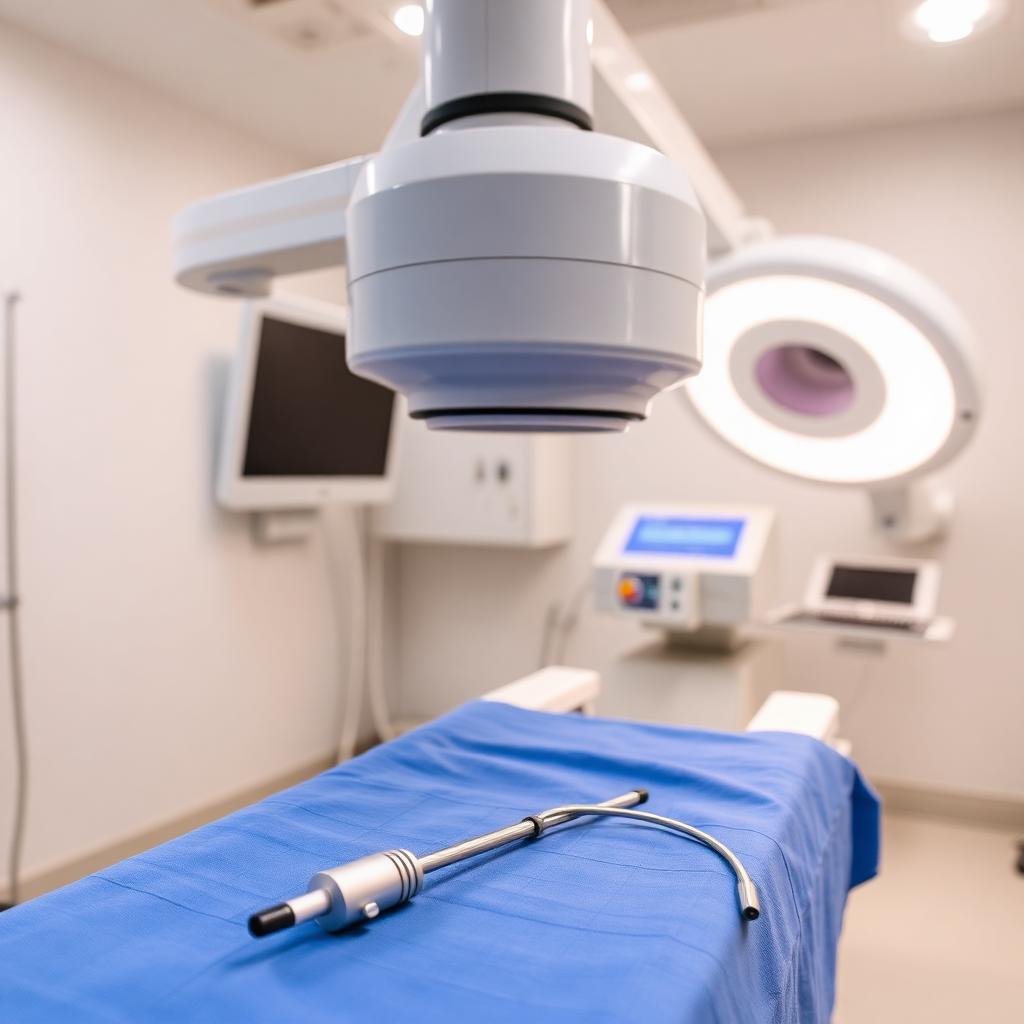
The procedure is performed under moderate sedation in our state-of-the-art Office-Based Lab (OBL):
- A small catheter is inserted through the radial artery at the wrist (or the femoral artery at the groin).
- Using fluoroscopic guidance, the catheter is navigated to the superior rectal arteries — the main blood supply to the internal hemorrhoidal cushions.
- Tiny coils and/or microspheres are deployed to reduce arterial inflow to the hemorrhoids.
- The catheter is removed and a small bandage is applied — no stitches, no anal instrumentation, no rectal packing.
The entire procedure typically takes 60–90 minutes. Most patients go home the same day and return to normal activities, including work, within 24–48 hours.
Benefits of Hemorrhoid Artery Embolization
- No Incision, No Excision: Nothing is cut, banded, or instrumented in the anal canal — a major advantage over hemorrhoidectomy.
- Virtually Painless Recovery: Because the anoderm is not touched, patients avoid the severe post-op pain associated with traditional hemorrhoid surgery.
- Quick Return to Work: Most patients resume normal activities within 1–2 days versus 2–4 weeks for surgery.
- Low Risk of Incontinence: The anal sphincter is never touched, preserving continence.
- Outpatient Procedure: Performed in our office-based lab — no hospital stay, no general anesthesia.
- Safe for Anticoagulated Patients: An excellent option for patients on blood thinners who are poor surgical candidates.
- Covered by Most Insurance Plans: Our office will help verify your coverage before scheduling.
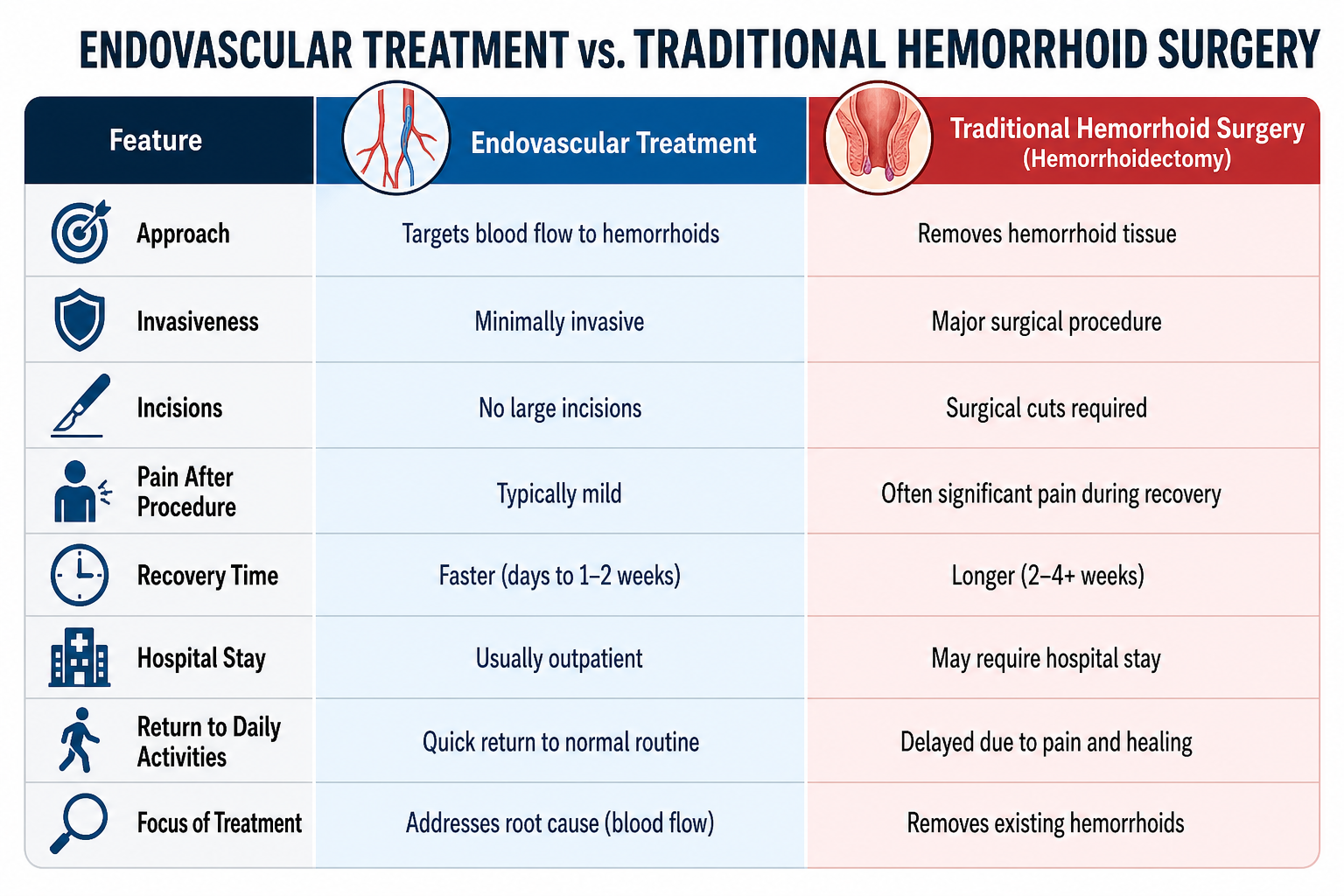
Endovascular Treatment vs. Traditional Hemorrhoid Surgery
The chart below compares Hemorrhoid Artery Embolization (an endovascular treatment) to traditional hemorrhoidectomy across the factors that matter most to patients — invasiveness, recovery, pain, and time away from daily life.
Latest Research on Hemorrhoid Embolization
The Emborrhoid technique is supported by more than a decade of peer-reviewed clinical evidence:
- Emborrhoid: A New Concept for the Treatment of Hemorrhoids with Arterial Embolization: The First 14 Cases — CardioVascular and Interventional Radiology (2015)
- Mid-Term Results of Superior Rectal Artery and Coils for Hemorrhoidal Embolization with Particles for Bleeding — CardioVascular and Interventional Radiology (2020)
- Embolization of the Superior Rectal Arteries for Chronic Bleeding Due to Haemorrhoidal Disease — Colorectal Disease (2017)
- Clinical Outcomes Following Rectal Artery Embolisation for Internal Haemorrhoids: A Systematic Review and Meta-Analysis — CardioVascular and Interventional Radiology (2022)
Published studies report bleeding control in roughly 90% of treated patients, with very low complication rates and no reports of anal incontinence.
Performed at Leading Medical Centers Nationwide
Hemorrhoid Artery Embolization (HAE) is part of a growing field of minimally invasive, image-guided interventional procedures. Leading academic medical centers and interventional radiology programs across the country are actively performing and researching arterial embolization for musculoskeletal and chronic pain conditions, including:
- UCLA HealthInterventional Radiology
- Mount SinaiInterventional Radiology
- Cleveland ClinicInterventional Radiology
- Mayo ClinicInterventional Radiology
- Johns Hopkins MedicineInterventional Radiology
- UCSF HealthInterventional Radiology
- Penn MedicineInterventional Radiology
- NYU LangoneInterventional Radiology
- Stanford Health CareInterventional Radiology
Restore Muscle and Joint is independent and not affiliated with the institutions listed above. Links are provided as references to the broader field of interventional radiology where these procedures are performed and studied.
Frequently Asked Questions
What is Hemorrhoid Artery Embolization (HAE)?
HAE — also called the Emborrhoid technique — is a minimally invasive procedure that treats symptomatic internal hemorrhoids by using tiny coils or particles to reduce blood flow through the superior rectal arteries that feed the hemorrhoidal cushions.
Who is a good candidate for hemorrhoid embolization?
Patients with chronic bleeding internal hemorrhoids (typically Grade I–III) that haven't responded to fiber, topical medications, banding, or sclerotherapy. It's especially valuable for patients on blood thinners or those who want to avoid the pain of a hemorrhoidectomy.
How long does the procedure take?
The procedure typically takes 60–90 minutes and is performed as an outpatient procedure in our office-based lab in Kansas City.
Is hemorrhoid embolization painful?
No. Because nothing is cut, banded, or placed inside the anal canal, patients experience virtually none of the post-op pain associated with traditional hemorrhoid surgery. Most report only mild soreness at the wrist or groin access site.
What is recovery like?
Most patients go home the same day and return to work and normal activities within 24–48 hours. There are no dietary restrictions, no rectal packing, and no need for narcotic pain medication.
Is HAE covered by insurance?
Many insurance plans, including Medicare, cover Hemorrhoid Artery Embolization for patients with documented symptomatic hemorrhoids that haven't responded to conservative care. Our office verifies coverage before scheduling.
Is HAE covered by Medicare?
Yes. Medicare and most major commercial insurance plans cover Hemorrhoid Artery Embolization for appropriately selected patients. Our team will confirm benefits prior to your procedure.
How is HAE different from a hemorrhoidectomy?
A hemorrhoidectomy surgically removes hemorrhoidal tissue from the anal canal and typically requires 2–4 weeks of painful recovery. HAE works from inside the artery — there are no incisions, no excision, no rectal instrumentation, and recovery is measured in days, not weeks.
How is HAE different from rubber band ligation?
Banding cuts off the local blood supply to a single hemorrhoidal cushion at a time and can be uncomfortable, often requiring multiple sessions. HAE treats all three primary feeding arteries in one outpatient procedure and is performed under sedation.
How long does the relief last?
Published studies show durable bleeding control in roughly 90% of patients, with results maintained at 1- and 3-year follow-up. Patients who develop recurrence can typically be re-treated.
Are there risks or side effects?
HAE has an excellent safety profile. The most common side effects are minor bruising at the wrist or groin access site and mild temporary rectal discomfort. Importantly, there are no reported cases of anal incontinence because the sphincter is never touched.
Is HAE the same as Emborrhoid or hemorrhoidal embolization?
Yes — 'Hemorrhoid Artery Embolization (HAE),' 'Emborrhoid technique,' 'hemorrhoidal embolization,' and 'superior rectal artery embolization' all refer to the same minimally invasive procedure.
Can I avoid hemorrhoid surgery with HAE?
For many patients with chronic bleeding internal hemorrhoids, HAE provides durable bleeding control and symptom relief that can eliminate the need for hemorrhoidectomy or stapled hemorrhoidopexy.
Who performs Hemorrhoid Artery Embolization at Restore Muscle and Joint?
HAE is performed at our Kansas City office by board-certified vascular surgeons Dr. Robert R. Carter (MD, FSVS, FACS, RPVI) and Dr. Jonathan E. Wilson (DO, FACOS, FSVS, RPVI), both with advanced fellowship training in image-guided endovascular procedures.
Meet Your HAE Providers
Your Hemorrhoid Artery Embolization is performed by board-certified vascular surgeons with advanced fellowship training in image-guided, minimally invasive procedures.

Dr. Robert R. Carter
MD, FSVS, FACS, RPVI
Board-certified vascular surgeon and Fellow of the American College of Surgeons. UC Davis medical degree, vascular surgery fellowship at the University of Kentucky. Published author and associate professor training the next generation of surgeons in Kansas City.
View Full Bio
Dr. Jonathan E. Wilson
DO, FACOS, FSVS, RPVI
Board-certified vascular surgeon specializing in minimally invasive, image-guided embolization procedures for chronic pain conditions of the hemorrhoidal, knee, shoulder, elbow, and foot.
View Full BioGet Your Free Consultation Today
If chronic bleeding or recurrent hemorrhoids are affecting your quality of life, Hemorrhoid Artery Embolization at Restore Muscle and Joint could be the answer. Contact us today at 816-452-4488 to schedule a consultation and learn if HAE is right for you.
Request Your Appointment Today
Request a visit and our care team will call you within one business day to arrange your appointment.
Ready to talk to a specialist?
Our care team can help you explore your options and arrange an appointment that fits your needs.
Most major insurance accepted · 4119 NW Barry Rd, Kansas City, near Zona Rosa